
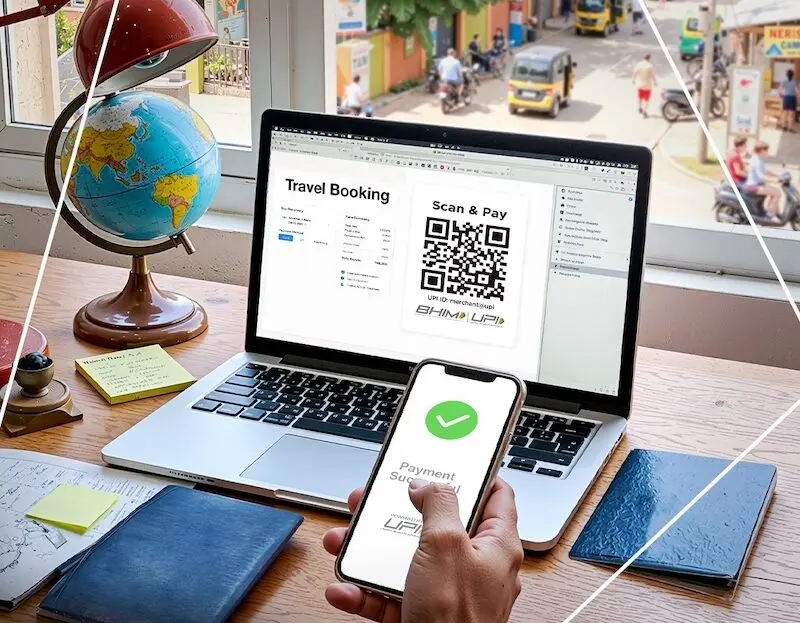
India’s Unified Payments Interface is a government-backed peer-to-peer infrastructure launched in 2016. It allows seamless payments between two bank accounts at near-zero cost.
UPI now powers 85% of India’s digital transaction volume, driven by its 900 million mobile internet users. Yet foreign ecommerce brands entering the country often rely on card-based checkout flows.
That mismatch hurts conversions from day 1.
The high UPI usage means buyers interact with localized, digital-first payment options such as Google Pay, Amazon Pay, PhonePe, and Paytm multiple times every day. From buying vegetables from a small roadside vendor to shopping at an expensive mall or buying groceries online, UPI is used everywhere.
For instance, I live in a mid-sized Indian city, Chandigarh. I rarely carry cash or even debit and credit cards. All transactions — food, fuel, school fees — happen on my phone via UPI, prompted mostly by scanning QR codes or, for ecommerce, by clicking the UPI option and entering my password.
For ecommerce operators, the inclusion of UPI is paramount, influencing conversion rates, brand trust, and shopper engagement.





网友留言2